 Eli "fetsh" Heiman
A Guide to Your First Pair of Running Shoes — and the Second One
Many of my friends who start running ask me the same thing: which shoes should they buy? So here’s everything I usually tell them, all in one place.
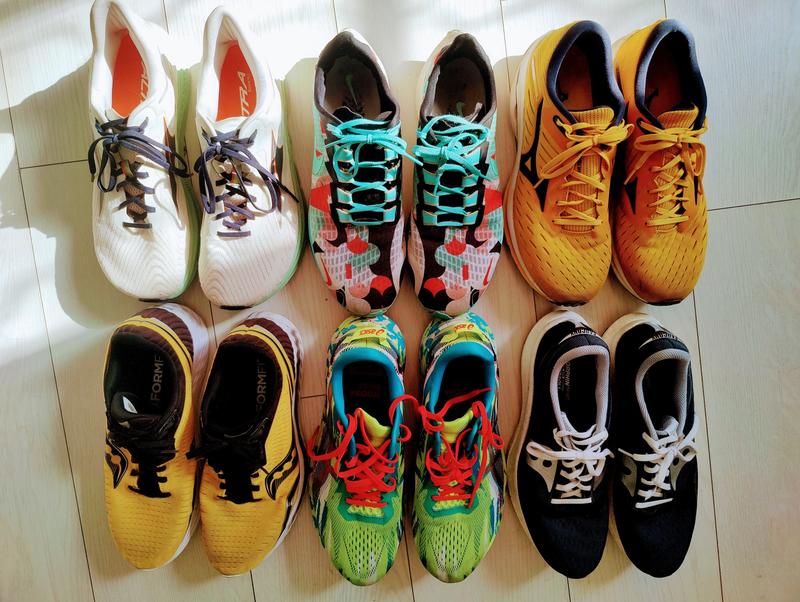
The current snapshot of my shoe rotation, which is mostly based on this theory can be found on the Gear page.
The simplest answer
Nike Pegasus. Just go and buy one.
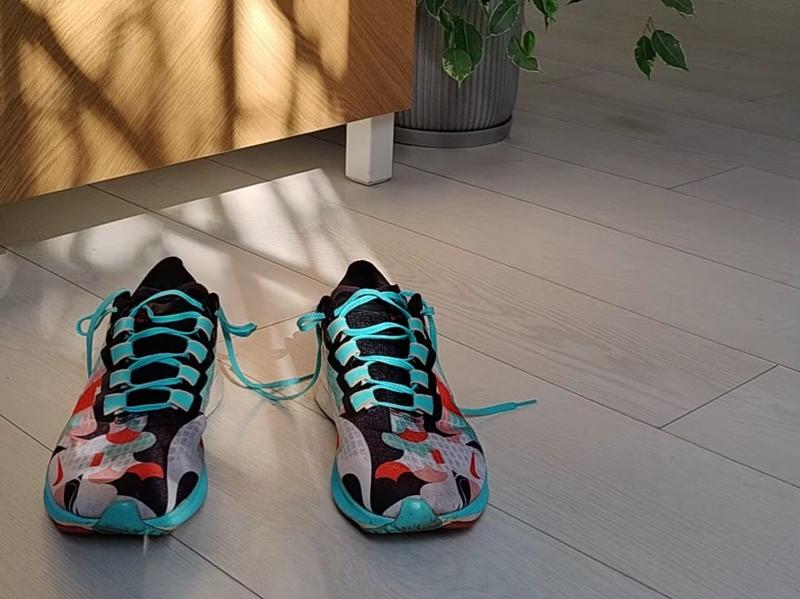
My old and beaten pair of weirdly colored Pegasi.
There are many categories of running shoes, each designed for a particular purpose. But the most important one is the daily trainer — the jack of all trades, master of none. A shoe designed to serve most runners on most of their runs. The pair you put on when there’s no targeted workout, no intervals, no speedwork — just a run.
Daily trainers are usually not very expensive, and you can almost always find a previous-season model in a discount store for much less.
The Nike Pegasus series has long been considered the industry’s “default” daily trainer — the gold standard of its class. It’s been around for decades, and it’s consistently comfortable, durable, and versatile, making it a safe and solid choice for nearly any runner.
Nike „refines” the Pegasus every year — small adjustments, material updates, design tweaks — but the underlying idea stays the same. Until you learn your own preferences, it’s best to start with this classic.
And they usually look the most casual of all (well, after „On Cloud”) — something you can wear straight from a run to a supermarket without looking like you’re in sports gear.
Daily trainers
Once you’ve worn out your first pair or simply want to explore alternatives, here’s how other brands interpret the idea of a daily trainer:
- Asics: Cumulus
- Mizuno: Wave Rider
- Saucony: Ride
- New Balance: 880
- Hoka: Clifton
- Brooks: Ghost
- Puma: Velocity Nitro
How do you choose the one that fits you?
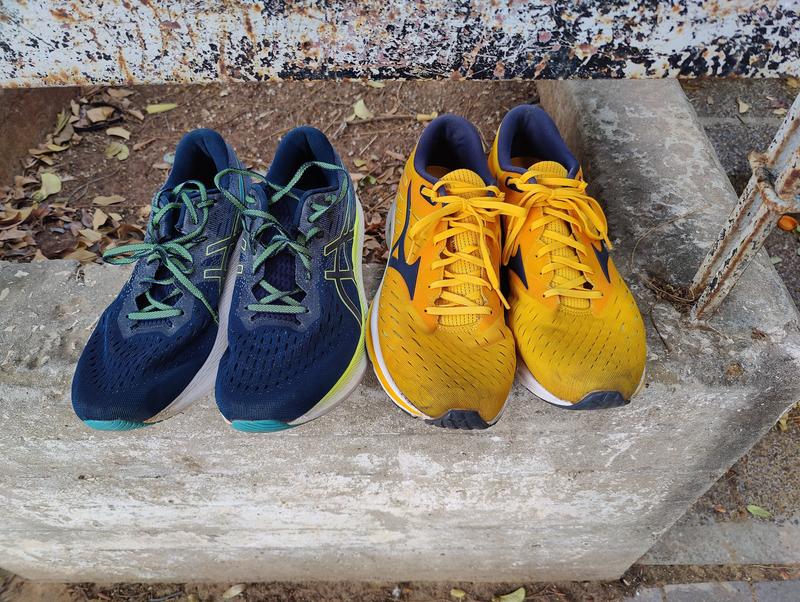
A couple of my retired daily trainers are sitting on the sidelines waiting to be adopted.
The main rule is simple: the best running shoes are the ones you actually want to run in. Everything else is secondary. If the objectively “top-rated” pair with glowing reviews feels uninspiring — it’s a bad shoe for you. Conversely, if the pair seems wrong on paper — heavy, black, high drop — but you put it on and immediately feel joy and the urge to head out the door, that’s a good shoe.
So for your first pair, focus on two things: comfort and beauty. Go to a specialized running store with as many brands as possible and a treadmill for testing. Try different daily trainers and pick the one that feels best on your foot and pleases your eye.
Slightly different daily trainers
From this point, there are two directions we can slightly branch into while staying within the realm of daily trainers: more cushioning and more support.
More cushioning
In all the time I’ve been running and studying the topic, I haven’t found a single convincing reason to use shoes with extra cushioning. But I’ve seen plenty of good reasons to stay away from them.
There’s no solid evidence that increased cushioning improves performance or helps prevent injuries. For most runners, more foam doesn’t make running more economical — in fact, overly soft midsoles can waste energy by absorbing and dissipating mechanical rebound instead of returning it. And in a large randomized controlled trial no difference in injury rates was found between “soft” and “firm” midsoles.
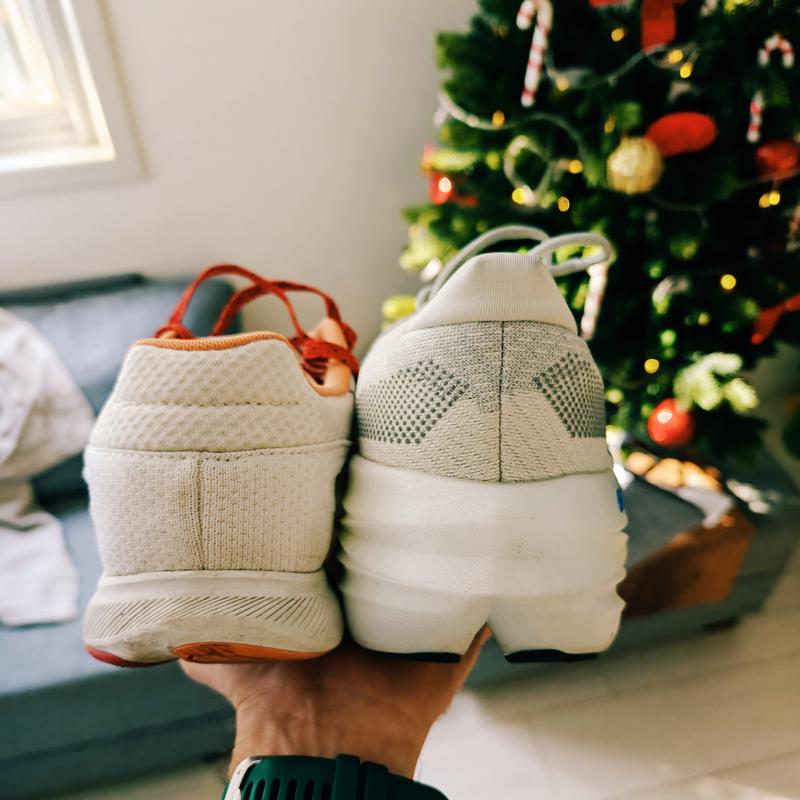
Ridiculously cushioned Brooks Glycerin Max on the right, and Altra Escalante on the left.
There are, however, a few situations where highly cushioned shoes might make sense: if you’re a heavier runner, or on slow recovery days when you want a bit of psychological comfort.
Very soft foams can reduce the perceived impact, which can feel nicer during easy runs — but objective impact metrics (like impact peak or loading rate) drop only marginally.
Anyway, following the same logic as before — if these shoes feel comfortable and look good to you, there’s no reason not to try them as well.
- Nike: Vomero (or Invincible)
- Asics: Nimbus
- Mizuno: Wave Sky
- Saucony: Triumph
- New Balance: 1080
- Hoka: Bondi
- Brooks: Glycerin (or Ghost Max)
- Puma: MagMax NITRO (or Magnify)
More support
Traditionally, support (or stability, motion control) refers to increased stiffness in the medial side of the midsole, meant to limit excessive pronation — the inward roll of the foot after landing. Manufacturers achieve this through design features such as: denser foam inserts in the medial area (dual-density EVA, medial post), guiding frames (GuideRails, 3D Guidance Frame, etc.) or rigid clips around the arch or heel.
Research shows that matching shoes to foot type (neutral vs. pronated) does not reduce injury risk. In fact, rigid correction — including medial posts — may shift load to other structures and increase the risk of overuse elsewhere.
Jay Dicharry, in Anatomy for Runners, makes the same point: strict correction of pronation interferes with the foot’s natural adaptability and may raise tension higher up the chain — in the knee or hip. Support doesn’t fix the root cause — weak or poorly coordinated muscles — it only hides it.
Since the early 2020s, brands have been moving away from rigid inserts, relying instead on midsole geometry and sidewall height to guide motion.
Returning to our main idea: the best injury prevention is a shoe that feels natural and comfortable. Modern “support” features are largely neutral in effect, so there’s no reason to avoid or seek them — choose based on comfort and design, not the stability/support label.
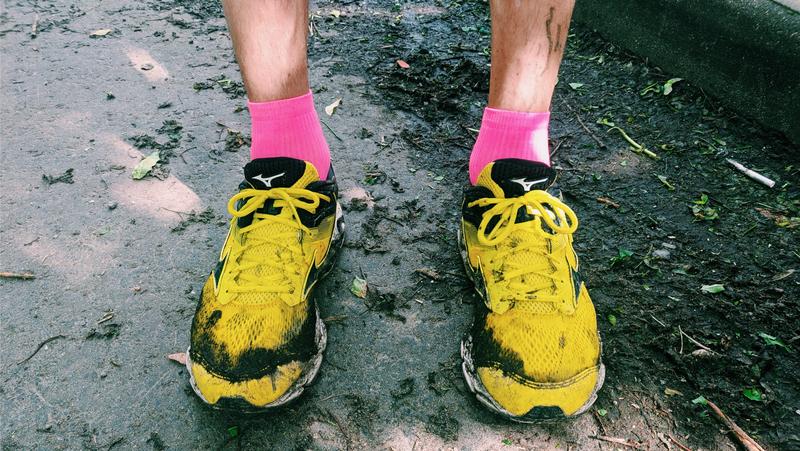
The shoes I loved the most: Mizuno Wave Inspire 15.
That said, support models are usually heavier (by about 20–40 g compared to standard daily trainers). Still, Mizuno Inspire was once one of my favorite pairs — simply because it felt exceptionally comfortable.
- Nike: Structure
- Asics: GT-2000 (or cheaper GT-1000)
- Mizuno: Wave Inspire
- Saucony: Guide
- New Balance: 860
- Hoka: Arahi
- Brooks: Adrenaline GTS
- Puma: ForeverRun Nitro
More support + more cushioning
And then there’s a creature that combines both extra support and extra cushioning — usually the heaviest of all. I’d stay away from those. Here they are:
- Nike: InfinityRN
- Asics: Kayano
- Mizuno: Wave Horizon
- Saucony: Hurricane
- New Balance: Vongo
- Hoka: Gaviota
- Brooks: Glycerin GTS
Digging deeper
Other key characteristics to consider are drop, weight, and toe box shape — the latter two often influence how a shoe feels and behaves more than the advertised “technology” or brand marketing.
Drop
Drop is the difference in height between the heel and the forefoot. Most modern running shoes have a drop of 8–12 mm, meaning the heel sits higher than the toe. Originally, this design aimed to reduce stress on the Achilles tendon and calf muscles, but it also slightly shifts posture backward and encourages heel striking.
Jay Dicharry, in Anatomy for Runners, argues that a large drop isn’t necessary for a healthy runner: it diminishes the natural function of the foot and makes movement less efficient. A lower or zero drop, on the other hand, activates the calves and Achilles, letting the body use tendon elasticity — though it requires gradual adaptation.
In general, drop doesn’t make a shoe “right” or “wrong.” It simply redistributes load: a high drop offloads the Achilles but stresses the knee, while a low drop does the opposite. The best choice is the one that feels natural and doesn’t cause discomfort.
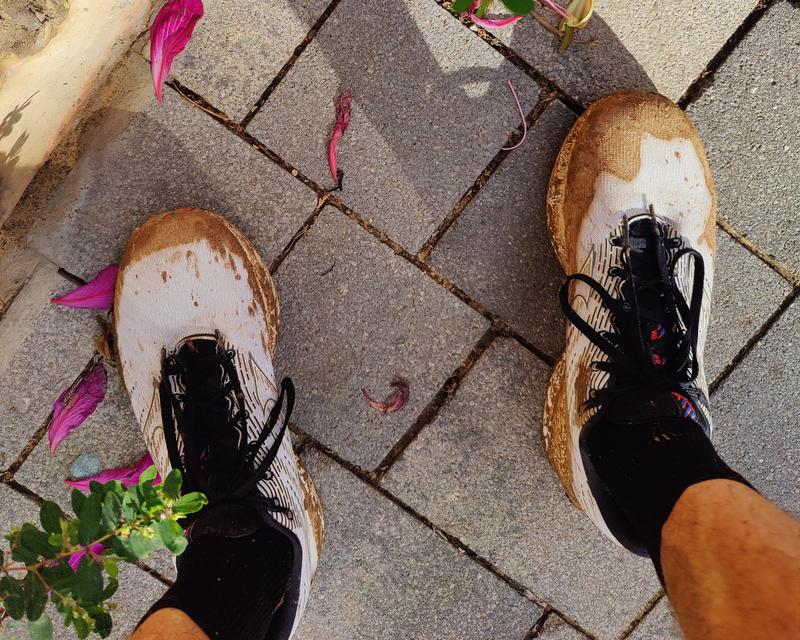
Mizuno Wave Rider 26 — still with the classic 12 mm drop; starting from the 29, it’s been reduced to 10 mm.
For most runners, an optimal range is 4–8 mm, leaning toward the lower end. This level doesn’t interfere with gait mechanics and requires no adjustment period, making it a safe choice for everyday running. Most daily trainers sit above that range — but that’s not a serious problem.
- Nike Pegasus 41: 10mm
- Asics Cumulus 27: 8mm
- Mizuno Wave Rider 29: 10mm (previous models – 12mm)
- Saucony Ride 18: 8mm
- New Balance 880 v15: 6mm
- Hoka Clifton 10: 8mm
- Brooks Ghost 16: 12mm
- Puma Velocity Nitro 4: 10mm
Weight
The more mileage I run per week, the more I notice shoe weight. It’s simple: the heavier the shoe, the less I want to put it on. Extra grams make the shoe feel like shackles, and every ten grams matter.
This is something you only realize in comparison — by rotating between different pairs you already own. And it’s almost impossible to judge in the store: what feels fine during a short try-on can start feeling heavy after a week or two of running.
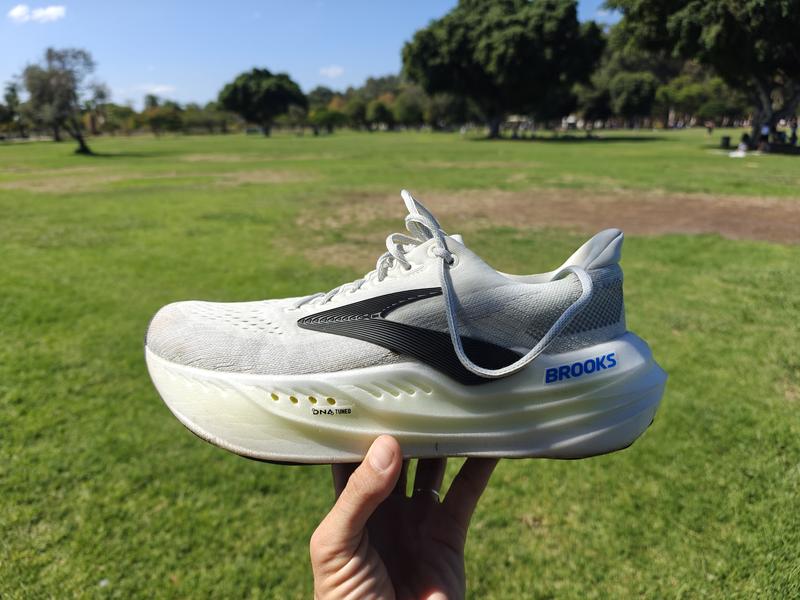
My heaviest and most hated pair of shoes.
Because of that, I pay close attention to the official weight listed by the manufacturer and avoid models exceeding my personal upper limit. It’s a small detail that makes a big difference over time.
Toe box shape
The toe box shape directly affects running stability. Jay Dicharry, in Anatomy for Runners, writes that stability begins with allowing the foot to move naturally: the toes must be able to spread, and the big toe should press into the ground to maintain balance. When the toe box is narrow, the foot loses mobility and can’t perform its stabilizing function.
Most mainstream running shoes from major brands — including nearly all the models mentioned above — have toe boxes that are too narrow, effectively squeezing the toes together like mild foot binding.
A simple way to check width fit is this: remove the insole and stand on it barefoot. Your foot should fit entirely within its outline, without hanging over the edge. If your toes extend beyond the insole, the shoe will restrict natural movement and reduce stability.
Together with weight, this is the main factor I look at when buying shoes.
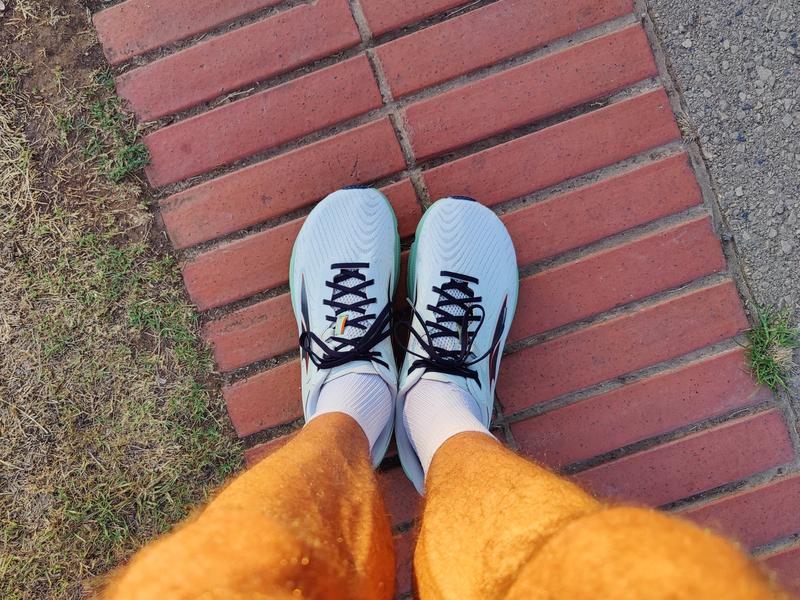
Altra Torin — roomy and comfy as a couch.
For me, Adidas performs the worst in this regard — their shoes consistently squeeze my toes, so I’ve excluded them entirely. Saucony also tends to press the toes until calluses form, and Brooks isn’t much better. Nike is tolerable. Among all the major brands, Mizuno and Asics fit me best — they give my toes space to move naturally.
Sole flares
Another aspect worth noticing is sole flares — the way the outsole extends slightly outward at the forefoot or heel.
I’m a strong advocate for them. When it comes to stability, these flares can completely change how a shoe feels underfoot. They provide a sense of groundedness and confidence, replacing that uneasy “rolling off the edge” sensation that sometimes leads to ankle twists. A well-designed forefoot or heel flare doesn’t make the shoe stiff — it just broadens the base of support, letting you relax into each step instead of constantly correcting your balance.
See Arch Support for Runners: What, How and Why or Footwear Science: Sole Flare
Sidewalls
If you have even a hint of a low arch, pay close attention in the store to how your foot interacts with the inner sidewall of the shoe. That soft foam wall rising from the midsole can sometimes press into the arch area instead of supporting it.
I’ve returned two pairs for exactly this reason — the inner sidewall dug into my foot and caused a blister. Yes, Hoka. It’s a subtle but critical detail: even if the cushioning and fit seem perfect at first, discomfort in that area tends to amplify with distance. A good shoe should cradle the arch, not press against it.
Size
You often hear the rule that you should buy running shoes half a size up from your normal size. During a run, the foot swells and expands — on long runs, a shoe that’s too tight can quite literally cost you a toenail.
On the other hand, some runners prefer their true-to-size fit: oversized shoes can slap against the ground like clown shoes, feel unstable, and add unnecessary weight.
You can often ask a store specialist for help — they’ll measure your foot, check how much space you have in the toe box, and suggest the right size based on both length and width.
Finding the right size comes only with experience, but as a safe bet, go half a size up. It’s usually enough to give your foot space without compromising control.
Tongue
There are two aspects of the tongue I pay attention to: how gusseted it is and how padded it is. A standard tongue is thick enough to protect the foot from lace pressure — preventing the laces from digging in. But this adds weight, so racing models often have thin, flat tongues. Sometimes that’s fine; sometimes it’s unbearable.
The second aspect is attachment. A tongue can be either free (connected only at the distal edge) or gusseted, stitched in place or anchored to the midsole by a flexible fabric. A gusseted or semi-gusseted tongue protects from debris and helps prevent migration inside the shoe.
The ideal option is a semi-gusseted, medium-padded tongue. Thickness often changes year to year within the same model. For example, Pegasus may have a thin tongue one year and a thick one the next. But whether the tongue is free or gusseted tends to be brand-dependent. Altra, for instance, uses a free tongue, and in Torin modle it’s also thin — the worst of both worlds for me.
Color
Everyone knows the rule — red or pink shoes make you faster, black ones feel as heavy as cast iron, and white ones as light as air.
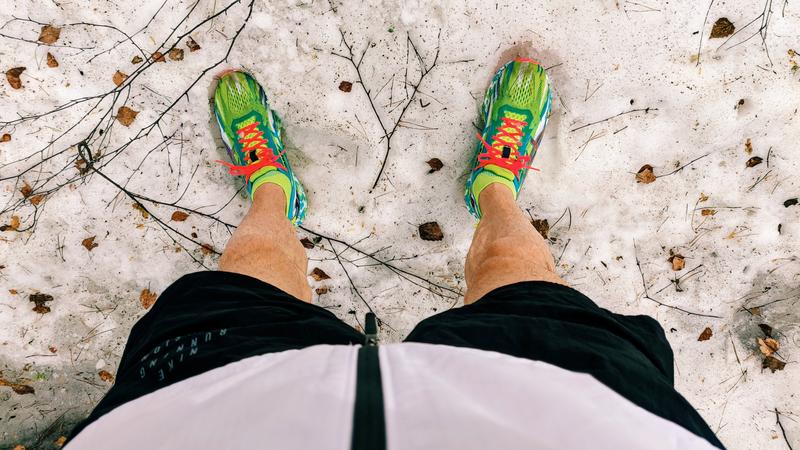
These Asics Noosa Tri 13 demonstrate both good color and fine sidewalls.
Second pair
It’s often said that there’s no research linking injury prevention to drop height, cushioning level, foam type, or stability features. But there is research showing a reduction in injury risk when runners rotate between several different pairs of shoes.
That’s why it makes sense to buy your second pair right away, without waiting for the first one to wear out. It can be another shoe in the same category — just a different brand. For example, Pegasus and Saucony Ride, or Asics Cumulus and Mizuno Wave Rider. You can focus on making them as different as possible in one key parameter, like drop. Or you can pick your second pair from the stability/support category.
Speed pair
If you’ve started racing or are moving in that direction, you might want to add a faster model to your rotation. In my mind, there are two main kinds of “speed shoes”: low-cushioned and high-cushioned with a stiffener.
Low-Cushioned
These are lightweight shoes with minimal cushioning, strong ground feel, and a small drop. It’s a disappearing category — the industry pendulum is now fully swung toward extreme cushioning. I use such shoes for short, fast intervals, when it’s pleasant to feel the ground and let the foot work actively.
In the past, models like Asics Noosa Tri, Asics Evoride, Saucony Kinvara, or Hoka Rincon belonged here. But even these have gradually gained more foam, so at this point the category almost exists only in my imagination. That said, I recently came across the Adidas Adios 9, which are probably the closest match to this category today.
High-Cushioned
This is what’s now often called a supertrainer — a shoe sitting between a classic daily trainer and a full racing supershoe. Almost like a carbon-plated racer, but more restrained. Instead of a carbon plate, it uses plastic or fiberglass; the foam isn’t fully PEBA but mixes it with EVA for durability; and the upper is built from less fragile, more practical materials.
For years, the benchmark here was the Saucony Endorphin Speed. Other good examples include Adidas Adizero Boston, Asics Magic Speed, Nike Zoom Fly.
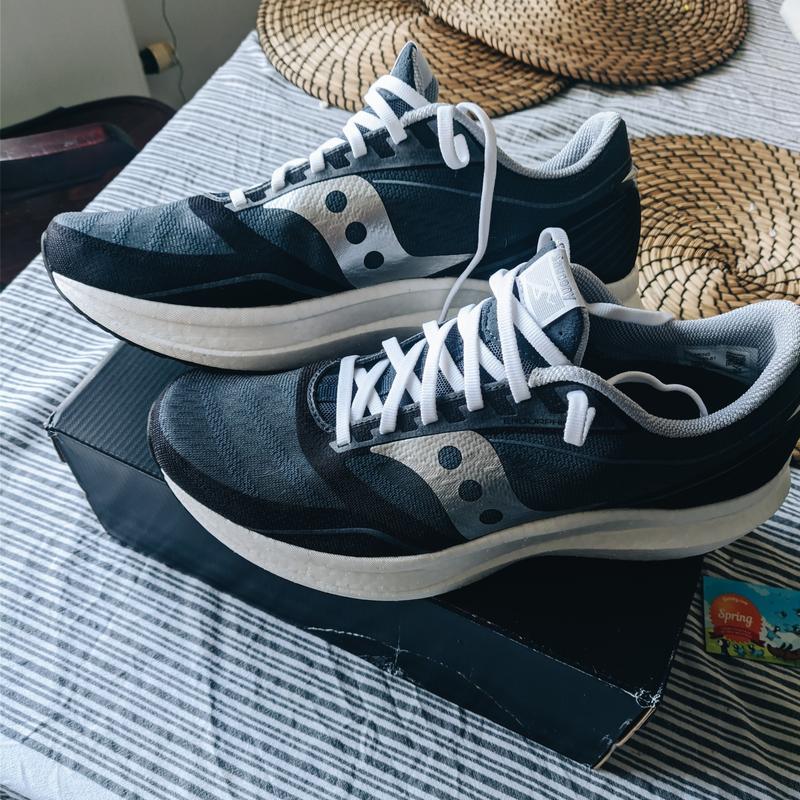
Saucony Endorphin Speed 2 from a limited edition collection.
I personally use Mizuno Neo Vista for this category, although they are not so fast.
The mud pair
Everyone needs a pair of bad-weather beaters — shoes you can take out in heavy rain and ankle-deep mud without thinking twice. Preferably black :)
Most often this role is filled by trail running shoes, but unless you run technical trails, you can easily manage with a regular road pair. Still, trail shoes do have their appeal — they’re often beautifully designed, and they offer a few advantages: a stickier outsole for traction, a reinforced structure for protection from sticks, rocks, and debris, and generally tougher materials overall.
A sales assistant might suggest a Gore-Tex version. Personally, I think that’s overkill — you’ll just end up with sweatier feet. A water-repellent coating and slightly more robust upper, like the old Nike Pegasus Shield, are more than enough.
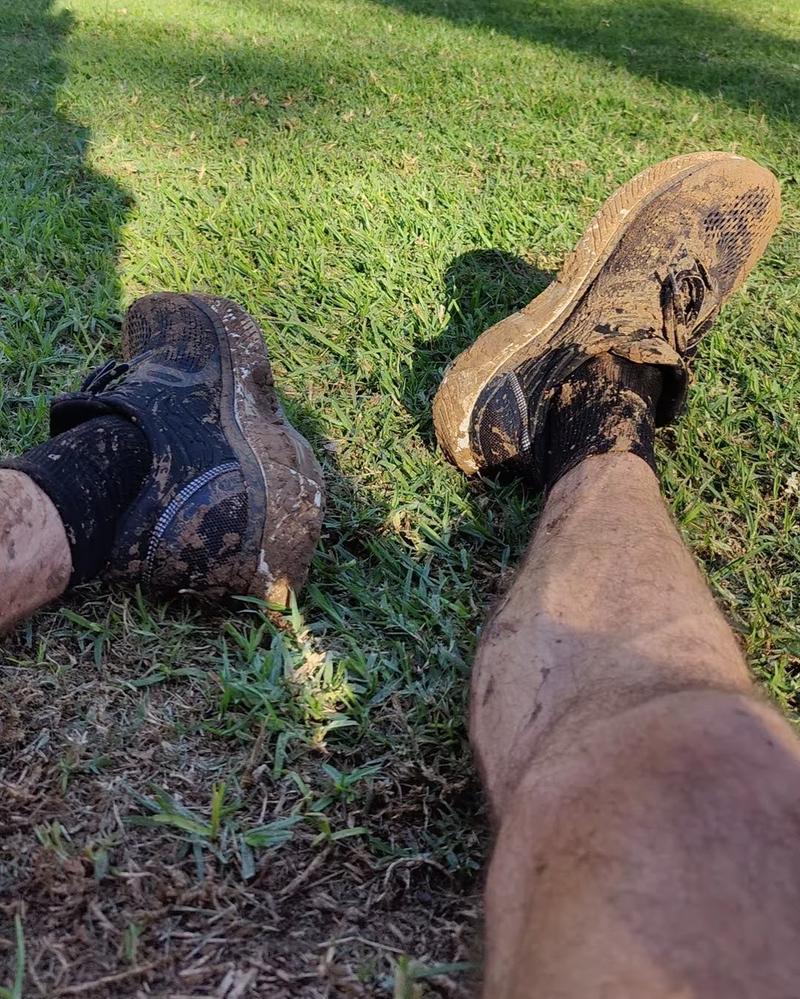
For some runners, even a second regular pair — just one they don’t mind getting dirty — is perfectly sufficient.
The minimalist pair
This is actually my favorite category — the minimalist shoe. Little to no cushioning, zero drop, and a toe box as wide as possible. I wear them on easy days, or when I feel particularly strong or adventurous.
There’s something deeply satisfying about running in them — the direct contact with the ground, the freedom of the foot working naturally, the awareness of every phase of the stride. Attention inevitably shifts inward, toward the body, its rhythm, and its bio-mechanics. It’s a more present way to run.
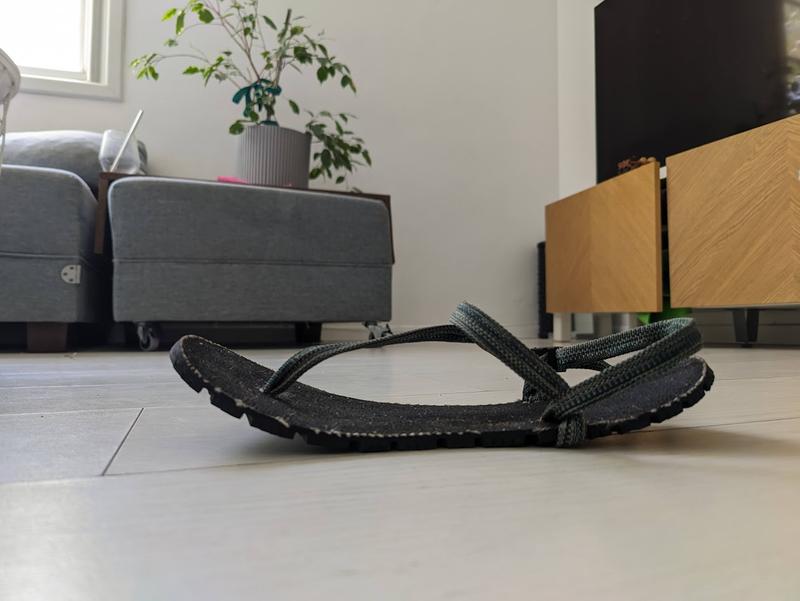
It also allows you to step outside the daily routine while still remaining within it — a small act of rebellion that doesn’t require changing anything. A quiet reset: the same route, the same weekly plan, yet an entirely different experience.
And beyond that sensory pleasure, there’s theory to support it: these shoes are said to make the foot stronger — not by design, but by demanding that it does the work itself.
It’s not easy to find a pair in this category. You can look into models like:
- Altra Escalante
- Some models from TOPO Athletic
- Maybe some Xero shoes
- Vivobarefoot Primus Flow
- Or even sandals
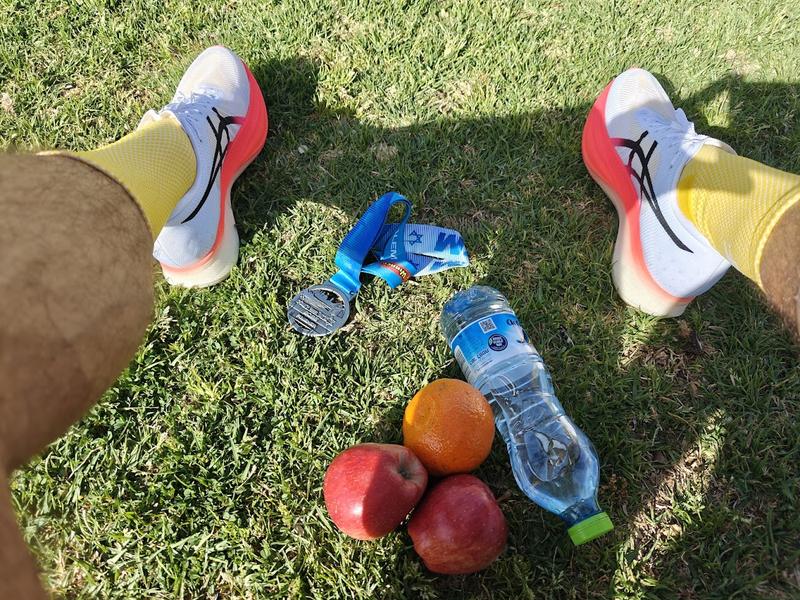
And finally, there are your racing shoes.
Cool additional links
https://runfaq.com/buyers_guides — Running Shoes Schemes: visual lineups and category maps for every major brand.
https://runrepeat.com/catalog/running-shoes — RunRepeat: an extensive database of running shoe reviews with detailed specs and measurements for each model.
https://www.doctorsofrunning.com/ — Doctors of Running: in-depth, experience-based reviews and biomechanical analysis from a group of physical therapists I trust.